To Sunday well is to do absolutely nothing, on purpose, without a purpose. No target, no timer, no takeaway.
It sounds easy. I want to tell you why, for people like us, it may be the hardest skill you ever learn — and how I learned it, reluctantly, after years of being certain I didn't need it.
The most disciplined man my friends know
I wake at 5:00. I give myself fifteen minutes to wash up and get to the gym, and I check in at 5:15 — there's a timestamp on my Instagram story to prove it, every day, weekends included. I don't miss.
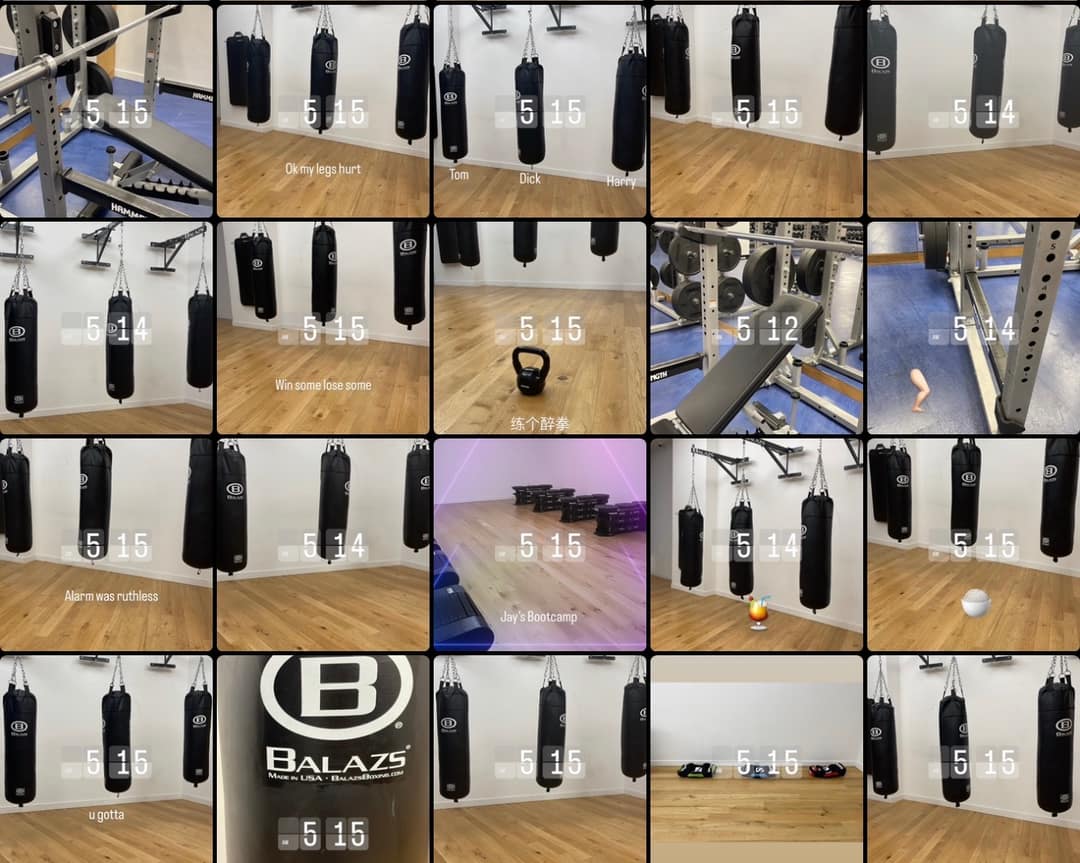
My friends call it the 5:15 Club, half in admiration, half as a diagnosis. And for years the timestamp was my whole philosophy: I believed every problem in life would eventually surrender to more discipline, applied earlier in the morning. It worked often enough that I never thought to question it.
Then a beach day took the theory apart.
The beach question I couldn't answer

The usual crew, a proper beach day. One by one, every other guy pulled his shirt off without a second thought.
I kept mine on. Me — the one who trains hardest of all of them, the one with the streak. After all those 5:15s, I still wasn't confident of what the training had bought me.
The questions came, friendly and fair, which made them worse: "You train so hard — why do you still look puffy? Why do you look swollen sometimes? Where did the abs go?"
I had no answer. I only knew that "train harder" — my answer to everything — was somehow not it. The real answer turned out to be the half of the equation nobody had ever taught me.
You can't out-train a switched-on nervous system
The word I was missing is cortisol — the stress hormone your body releases to keep you alert and ready, the one that tells your system to hold on to everything [1].

In short bursts it's useful; it gets you through the presentation and the last rep. The trouble starts when it never comes down. Held high month after month, it turns on you: weight that gathers exactly where you least want it, blood pressure and blood sugar creeping in the background [1]. Psychologists describe chronic stress as slow wear and tear across nearly every system in the body [2].
And here is the part that stung more than the beach question: none of my discipline touched it. The 5:15s, the clean meals, the streak — I was stacking all of it on top of a body that had never once been told it could stand down. Cortisol doesn't care about your streak.
That was the day I understood: rest is not the reward for the work. It is the other half of it.
Singapore switches on beautifully. Nobody taught us off.
Once I saw it in myself, I started seeing it everywhere here.

We are not short of discipline. Singapore ranks fourth among the world's most overworked cities and 45th of 100 for work-life balance [3]; 61 per cent of workers here report burnout [4]. And still the marathon slots fill, the 5am gym queue forms, the OT gets done. Switching on is a solved problem in this country.
Switching off is not. It has no syllabus, no class, almost no teachers — strange, for a skill this consequential. That gap is what kept my shirt on at the beach, and it is the reason this journal exists.
We were taught that rest must be earned
But why is off so hard here, specifically? Let me say the quiet part, because it took me years to admit it: I lived like that because I was educated in Singapore — and somewhere along the way I learned that I wasn't worth much unless I was working hard. A break never felt restful to me. It felt undeserved.
That wiring goes in early. We are graded, streamed and ranked from childhood; the PSLE sorts us at twelve; the report book is a child's first KPI. In the OECD's PISA study, 72 per cent of Singapore students said that when they fail, they worry about what others think of them — the OECD average is 56. Seventy-six per cent said their schoolmates compete with one another, against an average of 50 [5].
There is no blame in this. Our parents and teachers were graded too, and even the Ministry of Education has been quietly unwinding the machine, scrapping mid-year exams to reduce "the overemphasis on examinations and grades" [6].
But look at the adult that system produces: world-class at switching on, and quietly certain — decades after the last report book — that a break must be earned, and that it never quite has been. So rest doesn't just feel unproductive to us. It feels undeserved.
Doing absolutely nothing is a skill
The grading leaves a second habit in us, subtler than the first: we do everything for something. The run is for the marathon. The reading is for the book club. The hobby is for the CV.
I was the worst offender I know. In my New York years I meditated at a Zen temple on Lexington Avenue, every Thursday — and I had picked Thursday deliberately, because it was newcomers' day, which meant I could mini-socialise after the sitting. Sit still for an hour, then work the room. I had found a way to optimise my own attempt at peace.
The day I noticed that, I finally understood my problem. It was never a shortage of discipline. It was that I could not do anything — not even nothing — without a purpose attached. And a break with a KPI is not a break. It is more work, in athleisure.
There is a name for the alternative. The Dutch call it niksen: doing nothing, for no purpose — no achievement unlocked, no hack attached [7]. The science is kinder to it than your guilt is: when the mind idles and wanders, it engages what researchers call the brain's default mode — circuitry tied to memory, imagination and wellbeing. Rest, they concluded, is not idleness [8].
Doing nothing is not the absence of a skill. It is the skill — and like any skill, it has to be trained.
The ladder I climbed the wrong way
Everything I have learned since that beach day fits on one ladder.
Working hard is beaten by a good diet. A good diet is beaten by good sleep. Good sleep is beaten by managing your stress. And all of it is beaten by learning how to shut down and just feel — this moment, this place, this cold glass — instead of a mind running forty tabs at once.
I spent years perfecting the bottom rung and wondering why the view never changed. The top rung — presence — turned out to move everything underneath it.
The 5:15 is still my first discipline. Doing nothing is my second. It is by far the harder of the two.
Sunday is the training ground
You don't learn to switch off mid-week; Monday has opinions. You learn it the way you learn anything — one protected session a week, repeated until it holds. Mine is Sunday.
Not a productive Sunday done gently — a Sunday that owes nobody anything. The long breakfast. The walk with no route. The green hour under a tree at the Botanic Gardens. The afternoon nobody measures. If you want the hour-by-hour version, I've written a full lazy Sunday itinerary — take it, then loosen it.
And because a switched-on mind needs a signal that the session has begun, I keep one small ritual.
The stopping does the work. The bottle marks the hour it begins — a permission slip you can hold in one hand.
Permission, in the end, is the thing we actually lack. Not permission to be idle — permission to be worth something while doing nothing.
That is what Sundaying well means.
The week will switch you on again soon enough; it always does. This Sunday, let the timestamp go unposted. Sit somewhere green. Notice the condensation on the glass, the light moving through the leaves, an hour passing that you did not earn and did not spend.
You have nothing to do. Let that, for once, be the point.
Jay Qin is a long-term guest columnist for The Slow Sunday Journal, and the founder of the 5:15 Club.